Hair Oil for Dry Hair: Which Oils Work and How to Use Them

The right hair oil for dry hair is one that softens your lengths without leaving your scalp greasy. For most people with dry, rough or frizzy hair, that means a penetrating oil such as coconut, or a rich blend, used before washing and focused on the mid-lengths and ends. A few drops of a light oil on dry ends after washing can then help hold that softness in.
Dry hair is one of the most common complaints we hear at Velvet Touch Cosmetics in Lahore. Hot summers, dusty air, hard water and regular heat styling all pull moisture from hair. This guide explains which oils work for dry hair, which ones to be careful with, and exactly how to use them so your hair feels softer rather than heavier.
Key Takeaways
- Oil cannot add water to hair, but it can slow moisture loss, reduce friction and make dry hair feel softer and smoother.
- Coconut oil is one of the few oils shown to soak into the hair shaft. Argan, almond, olive and jojoba mainly coat and smooth the surface.
- Oil dry hair 30 to 60 minutes before washing, mostly on the lengths and ends, then shampoo it out.
- A few drops of a light oil or serum on damp ends after washing helps lock in softness.
- Once or twice a week is enough for most dry hair. More oil is not better.
- Sudden, severe dryness or breakage can have a medical cause. Speak to a doctor if oil and gentle care do not help.
Table of Contents
- Why Hair Gets Dry, Especially in Pakistan
- How Hair Oil Helps Dry Hair
- Best Oils for Dry Hair
- Which Oil Is Best for Your Type of Dry Hair?
- How to Use Hair Oil for Dry Hair
- How Often Should You Oil Dry Hair?
- Mistakes That Make Dry Hair Worse
- Dry Hair Care Tips for Pakistani Weather
- When Dry Hair Needs More Than Oil
- Frequently Asked Questions
Why Hair Gets Dry, Especially in Pakistan
Your scalp makes a natural oil called sebum. It keeps hair soft and flexible, but it travels slowly down the strand. The ends, which are the oldest part of the hair, get the least of it. That is why dry hair usually feels worst at the ends and fine near the roots.
Several everyday things make dryness worse:
- Heat styling. Blow-drying, straightening and curling, especially before weddings and events, can roughen the outer layer of the hair.
- Colour, bleach and rebonding. Chemical treatments open up the hair surface so it loses moisture faster.
- Harsh or frequent washing. Strong shampoos and very hot water strip natural oils.
- Hard water. Many Pakistani cities have mineral-heavy water that can leave hair feeling rough and dull after washing.
- Sun, dust and heat. Long summers and dusty air add to the damage, while dry winter air pulls moisture out.
- Friction. Rough towels, tight hairstyles and cotton dupattas or scarves rubbing against the hair can lift the cuticle and cause frizz.
Knowing the cause matters, because oil helps most when it is part of a gentle routine, not a fix for damage that keeps happening.
How Hair Oil Helps Dry Hair
Hair oil does not “hydrate” hair the way water does. What it does is just as useful: it seals the surface, reduces friction between strands, slows down moisture loss and makes the hair feel smoother. This is why oiled hair tangles less and breaks less when you comb it.
Not all oils behave the same way. Oils fall into two rough groups:
- Penetrating oils can soak into the hair shaft. Coconut oil is the best-known example. In a 2003 lab study, coconut oil used before and after washing reduced protein loss from both damaged and undamaged hair, while sunflower and mineral oil did not.
- Coating oils mostly stay on the surface. Argan, almond, olive and jojoba fall here. They are excellent for smoothing frizz and adding shine, especially on the ends.
In practice, many people with dry hair do best with a penetrating or rich oil before washing and a light coating oil, or serum, on the ends afterwards.
Best Oils for Dry Hair
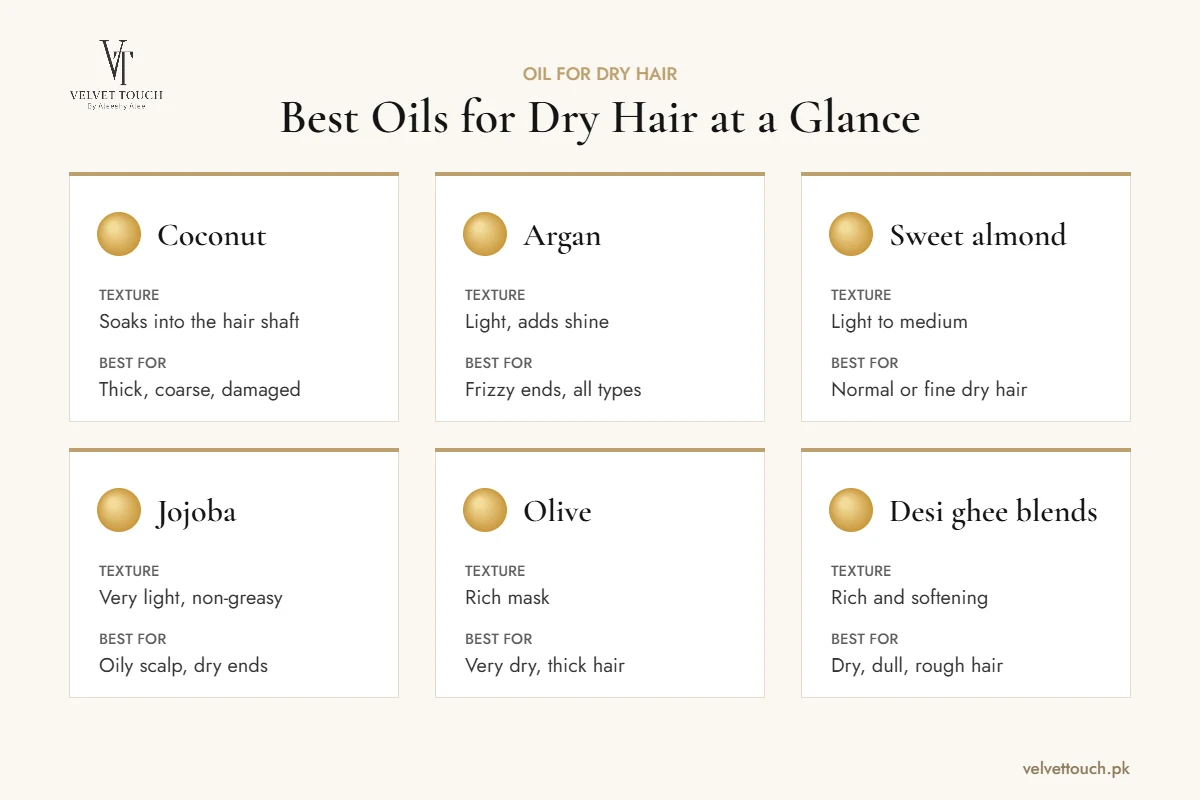
There is no single best oil for dry hair. The right choice depends on how thick your hair is, how oily your scalp gets and what you can easily buy. This table compares the most common options in Pakistan.
| Oil | Texture | Best for | Watch out for |
|---|---|---|---|
| Coconut | Medium, solid in winter | Thick, coarse or damaged dry hair | Can feel heavy on fine hair; may stiffen some coarse hair |
| Argan | Light | Frizzy ends, shine, all hair types | Pure argan is costly; check the label |
| Sweet almond | Light to medium | Normal to fine dry hair | Avoid if you have a nut allergy |
| Olive | Medium to heavy | Very dry, thick hair as a mask | Needs a thorough wash |
| Jojoba | Very light | Oily scalp with dry ends, fine hair | Less softening on very coarse hair |
| Sesame (til) | Medium | Traditional warm-oil massage | Strong smell for some people |
| Castor | Very thick | Small amounts mixed into another oil | Hard to wash out on its own |
| Mustard (sarson) | Medium, pungent | Traditional use only, with care | Can irritate sensitive skin; patch test |
| Desi ghee based blends | Rich | Dry, dull, rough hair | Use less on fine hair or an oily scalp |
Coconut Oil
Coconut oil is often the first choice for dry hair, and with good reason. It is one of the few oils that can move into the hair shaft, which helps protect hair from damage during washing. Use it as a pre-wash treatment on the mid-lengths and ends. In winter it turns solid, so warm the bottle in a bowl of warm water first. If your hair is fine, or if coconut oil leaves it feeling stiff, switch to a lighter oil.
Argan Oil
Argan oil is light, absorbs quickly and gives a soft, glossy finish. It is ideal for frizzy, dry ends and works well as a leave-in: two or three drops rubbed between your palms and pressed into damp ends. Because it is expensive, many products sold as argan oil are blends, so read the ingredient list.
Sweet Almond Oil
Sweet almond oil, or badam ka tel, is a familiar oil in many Pakistani homes. It is lighter than coconut oil, so it suits normal or slightly fine hair that is dry at the ends. Use it before washing, or mix a little into a heavier oil to make it spread more easily. Skip it if you are allergic to nuts.
Olive Oil
Olive oil is rich and heavy, which makes it a good occasional mask for very dry, thick hair. Apply one to two tablespoons to dry hair, cover it with a warm towel or shower cap for 20 to 30 minutes, then shampoo well. It is usually too heavy to use as a leave-in.
Jojoba Oil
Jojoba is technically a liquid wax and feels very close to the skin’s own oil. It is one of the best choices if your scalp gets oily but your ends are dry, because a few drops smooth the ends without weighing hair down.
Sesame (Til) Oil
Sesame oil is widely used in traditional South Asian oil massage. It spreads easily and feels comfortable when warmed. It can be a good pre-wash oil for dry hair, but some people find the smell strong.
Castor Oil
Castor oil is very thick and sticky, so it is hard to apply and wash out on its own. If you like it, mix one part castor oil with three or four parts of a lighter oil such as almond or coconut. Claims that castor oil grows hair are not backed by strong research.
Mustard (Sarson) Oil
Mustard oil has a long history in home hair care, but it contains compounds that can sting or irritate sensitive skin. It is not our first pick for dry hair. If you use it, keep it to the lengths, patch test first and stop if your scalp feels hot or itchy.
Desi Ghee Based Hair Oil
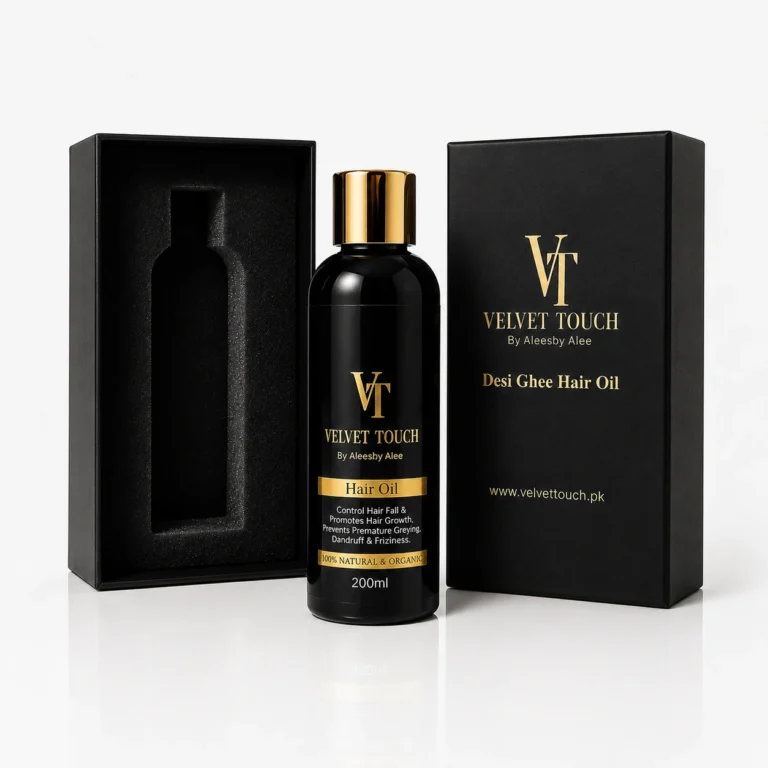
Desi ghee is a rich fat that coats dry hair and makes it feel softer and smoother. Our guide on desi ghee for hair covers using plain ghee from the kitchen. If you want something easier to spread and wash out, the Velvet Touch Desi Ghee Hair Oil (200ml, ₨2,499) is a desi ghee based herbal oil made for dry, dull and hard-to-manage hair. Use less, and keep it to the lengths, if your hair is fine or your scalp gets oily fast.
Which Oil Is Best for Your Type of Dry Hair?
Dry hair is not all the same. Match the oil to your hair rather than to the latest trend.
| Your hair | Try | How to use it |
|---|---|---|
| Fine and dry | Jojoba, argan, sweet almond | A few drops on ends only, or a short pre-wash on lengths |
| Thick or coarse and dry | Coconut, olive, desi ghee blends | Generous pre-wash treatment on lengths and ends |
| Curly or frizzy | Argan, coconut | Pre-wash oil, then 2 to 3 drops on damp ends |
| Colour-treated or heat-damaged | Coconut before washing, argan after | Weekly pre-wash, plus leave-in drops on ends |
| Oily scalp, dry ends | Jojoba, argan | Keep oil off the roots completely |
| Dry, tight scalp | Sesame, almond, light blends | Small amount massaged into the scalp, then washed out |
Not sure which group you are in? Notice how your hair feels a day after washing. Greasy roots point to an oily scalp. Rough, straw-like ends point to dry lengths. Many people have both. For a wider comparison of oils for every hair type, see our guide to choosing the best hair oil in Pakistan.
How to Use Hair Oil for Dry Hair
How you apply oil matters as much as which oil you choose. These are the three methods that work best for dry hair.
Pre-Wash Oiling (The Main Treatment)
- Start with dry hair. Oil spreads unevenly on wet hair.
- Warm one to two teaspoons of oil for shoulder-length hair by standing the bottle in warm water. Use more for long, thick hair and less for short or fine hair.
- Part your hair into four sections so the oil reaches every strand.
- Work the oil into the mid-lengths and ends first, where dryness is worst. Only massage the scalp if it feels dry.
- Twist your hair loosely and leave the oil on for 30 to 60 minutes.
- Shampoo with lukewarm water, twice if the hair still feels coated, then condition the lengths.

Leave-In Drops for Dry Ends
After washing, rub two or three drops of a light oil such as argan or jojoba, or a few drops of a hair serum, between your palms. Press it into damp ends, not the roots. This seals in moisture, cuts frizz and helps protect ends from friction during the day. The Velvet Touch Hair Serum (50ml) works the same way if you prefer a ready-made finish.
Overnight Oiling: When It Helps
Overnight oiling is a common habit, and very dry, thick hair can enjoy it once in a while. It is not necessary for good results, though. Thirty to sixty minutes is enough for most people. If you do oil overnight, use a small amount, keep it off an oily or acne-prone scalp, tie your hair loosely and cover your pillow.
How Often Should You Oil Dry Hair?
For most people with dry hair, a pre-wash oil treatment once or twice a week is enough. Very dry, coarse or curly hair may enjoy it before every wash. Fine hair usually does better with once a week, or leave-in drops on the ends only.
Watch how your hair responds. If it feels flat, limp or coated after washing, use less oil or wash more thoroughly. If the ends still feel rough a day later, add a few leave-in drops after washing.
Mistakes That Make Dry Hair Worse
- Using too much oil. Excess oil needs harsher or repeated shampooing to remove, which can leave hair drier than before.
- Oiling the scalp and forgetting the ends. Dryness lives at the ends. Put the oil where it is needed.
- Washing with very hot water. Lukewarm water removes oil just as well and is kinder to dry hair.
- Skipping conditioner. Oil works best alongside a conditioner, not instead of one.
- Rough towel drying. Press water out with a soft towel or an old cotton T-shirt instead of rubbing.
- Heat styling without protection. Let hair dry partly before blow-drying and keep straighteners on a lower setting.
- Leaving oil in for days. Oil left on the scalp collects dust and sweat, which can cause itching and flakes.
Dry Hair Care Tips for Pakistani Weather
Summer. Heat and sweat make heavy oils feel sticky. Use lighter oils, shorter oiling times and keep oil off the scalp. Cover your hair in strong sun.
Monsoon. Humidity swells dry, porous hair and causes frizz. A few drops of argan oil or serum on damp ends after washing helps keep hair smooth.
Winter. Dry air and hot showers pull moisture from hair. This is when richer oils such as coconut, olive or desi ghee blends feel best, and when weekly pre-wash oiling makes the biggest difference.
Hard water. If your hair feels rough straight after washing, rinse well, use a gentle shampoo and always follow with conditioner. A final rinse with filtered or bottled water can help if dryness is severe.
If you prefer a complete routine, the Hair Care Kit brings together shampoo, conditioner, hair serum and Desi Ghee Hair Oil in one set.
When Dry Hair Needs More Than Oil
Oil and gentle care help most dry hair within a few weeks. Speak to a doctor or dermatologist if your hair suddenly becomes very dry or brittle, breaks easily despite good care, or comes with hair fall, scalp redness, scaling or itching. Problems such as low iron, thyroid conditions and some scalp conditions can show up first in the hair, and they need proper treatment rather than more oil.
Frequently Asked Questions
Which oil is best for dry hair?
Coconut oil is one of the best all-round oils for dry hair because it can soak into the hair shaft. Argan and jojoba suit fine hair and frizzy ends, while olive oil and desi ghee blends suit very dry, thick hair. The best choice depends on your hair thickness and how oily your scalp gets.
Should I apply oil to dry hair or wet hair?
For a pre-wash treatment, apply oil to dry hair so it spreads evenly. For a leave-in finish, use a few drops of a light oil on damp ends after washing to seal in moisture.
How long should I leave oil in dry hair?
Thirty to sixty minutes before washing is enough for most people. Very dry, thick hair can occasionally be oiled overnight, but it is not necessary and it can lead to buildup.
Can hair oil fix dry hair permanently?
No. Oil makes dry hair softer and protects it while you use it, but damaged hair cannot repair itself. Lasting improvement comes from steady care, less heat and gentler washing, and trimming badly damaged ends.
Is coconut oil good for dry hair?
Yes, for most people. Coconut oil can help reduce protein loss during washing and leaves dry hair softer. A small number of people with coarse hair find it makes their hair feel stiff. If that happens, try argan or almond oil instead.
Can I use hair oil if I have an oily scalp but dry ends?
Yes. Keep the oil off your roots and apply a small amount only to the mid-lengths and ends. Light oils such as jojoba or argan work best for this combination.
Does oiling help dry, frizzy hair?
Yes. Oil smooths the hair surface and reduces friction, which makes frizzy hair easier to manage. A pre-wash treatment plus two or three drops on damp ends after washing works well, especially in humid weather.
Which oil is good for a dry scalp?
Light oils such as sesame, almond or jojoba can help a dry, tight scalp feel more comfortable. Massage in a small amount and wash it out. If your scalp is flaky, itchy or red, see a doctor, as oil can make some scalp conditions worse.
Conclusion
The best hair oil for dry hair is the one that suits your hair thickness and scalp. Coconut and desi ghee blends work well before washing on thick, dry hair. Argan and jojoba suit fine hair and frizzy ends. Whatever you choose, use a small amount, focus on the lengths and ends, wash it out well and give your routine a few weeks before you judge the results.
Ready to Try a Rich Oil for Dry Hair?
If your hair feels dry, dull or rough, try the Velvet Touch Desi Ghee Hair Oil, a 200ml desi ghee based herbal oil for ₨2,499. Delivery is free across Pakistan and Cash on Delivery is available. Do a patch test first, and see how your hair feels after a couple of washes.